Games · Playable prototype
WarDesk
A two-player strategy game where both sides plan their orders in secret, then watch toy-soldier armies clash all at once.
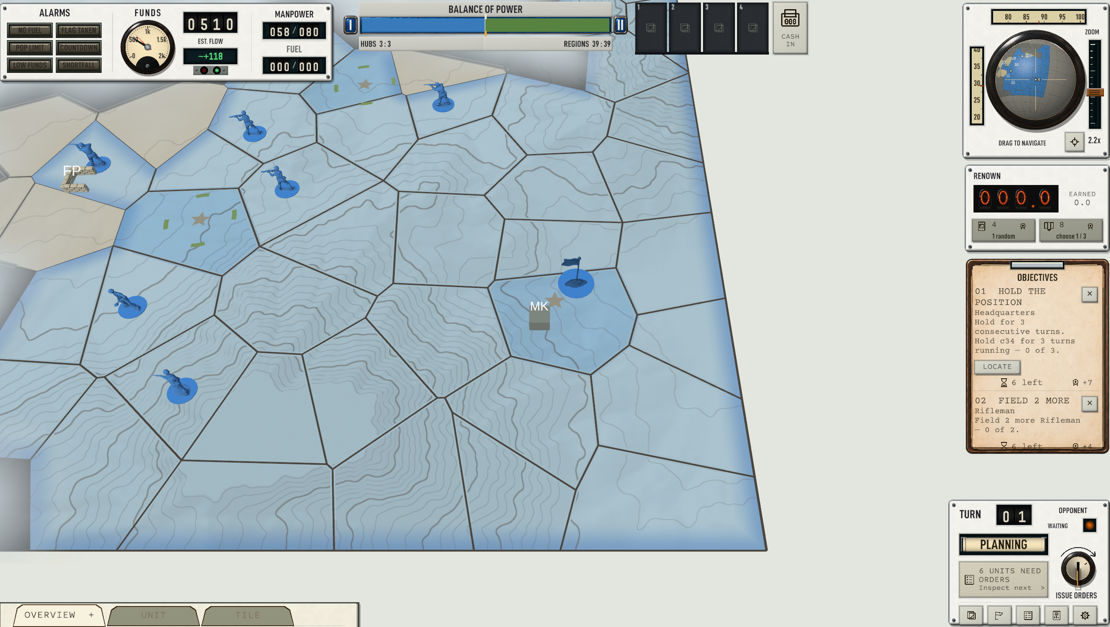
WarDesk is a two-player strategy game I’m designing, played with toy soldiers on a map of irregular territories. Both players write their orders in secret at the same time. Then every advance, battle and artillery shell resolves at once, so the real skill is predicting what your opponent will do.
How a turn works
WarDesk uses simultaneous turns, sometimes called WEGO. Both players plan, then the turn plays out on its own in phases: early ranged fire, battles, late ranged fire, and finally an evaluation of who holds what. You never react to your opponent’s move; you have to anticipate it.
Four ways to win
- Capture the enemy’s flag.
- Shell the flag until it falls.
- Send a Spy to steal the flag and carry it back to your own lines.
- Hold 70% of the map’s hubs for three turns in a row.
The battlefield
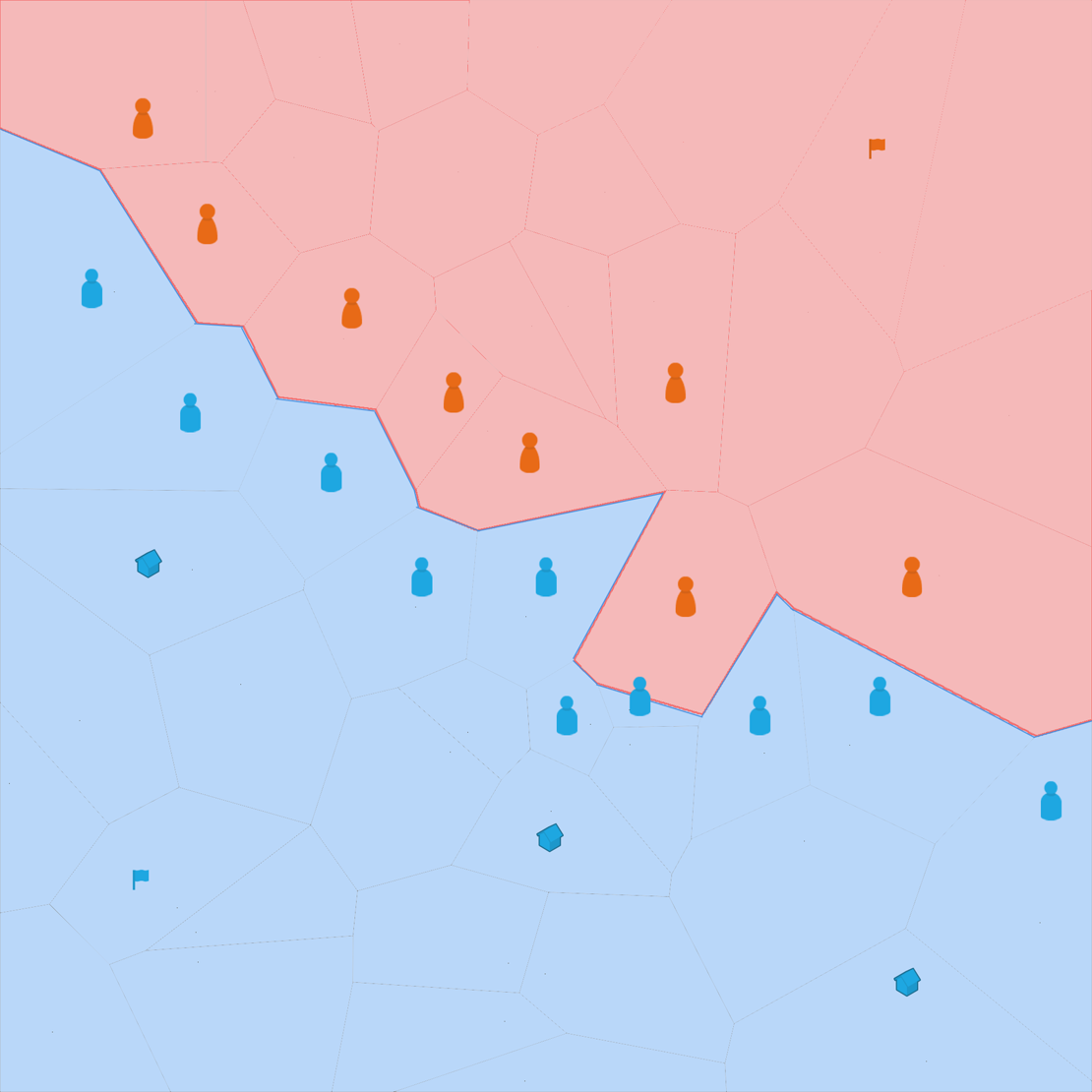
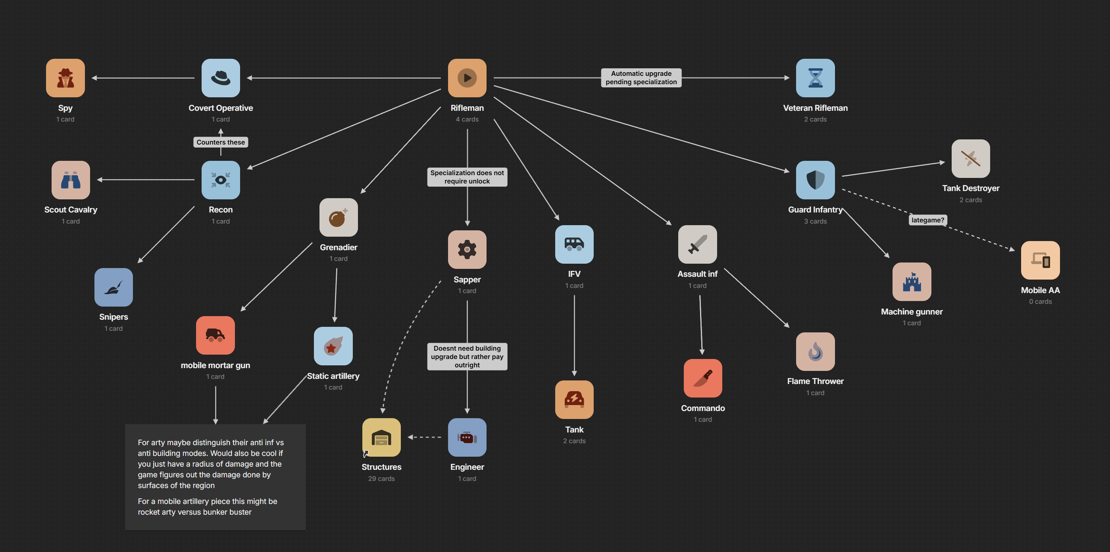
The map is a Voronoi diagram: a patchwork of irregular cells that each hold at most one unit. Maps come in four sizes, from 7 to 23 victory hubs. There are 21 regular unit types, plus a Special Project for each side, assembled from parts during the match: a siege gun, a landship, a rocket battery or an observation balloon. Fog of war hides the enemy, and units you have spotted before linger as remembered “ghosts”.
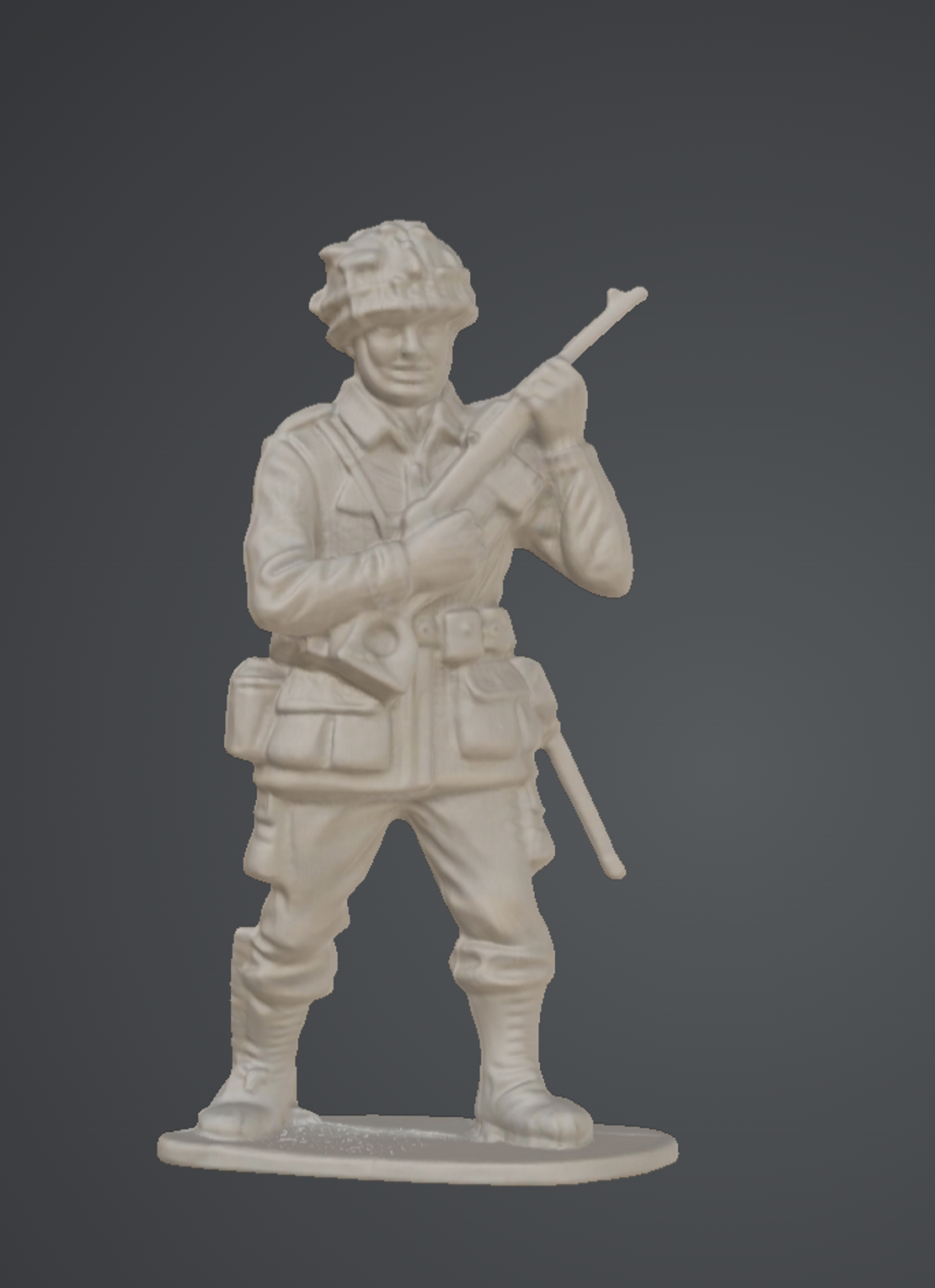
Toy soldiers on a war-room desk
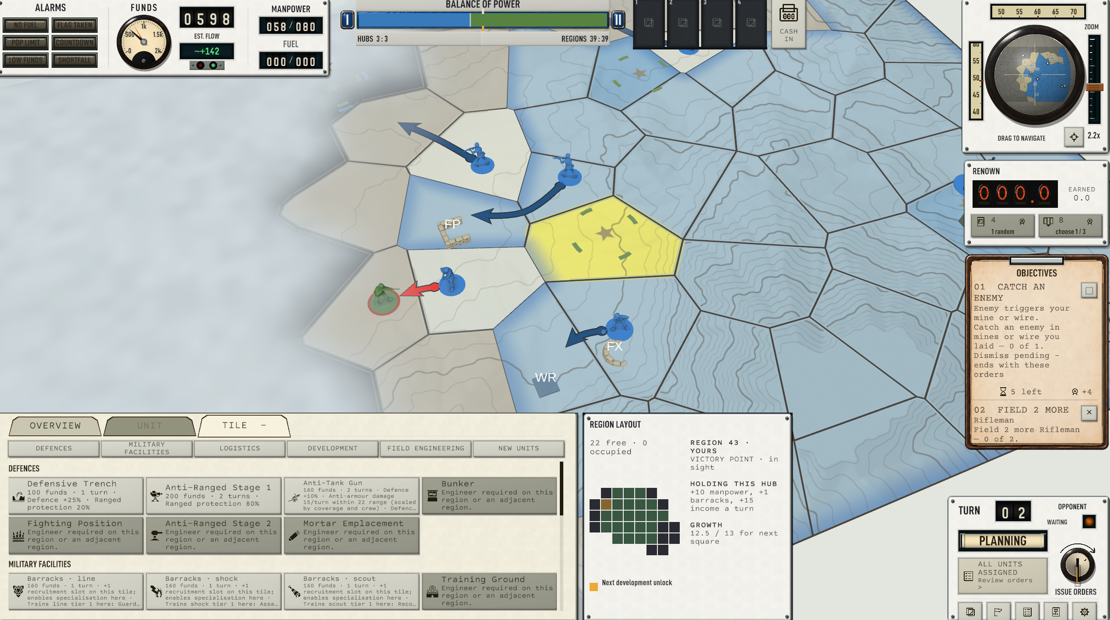
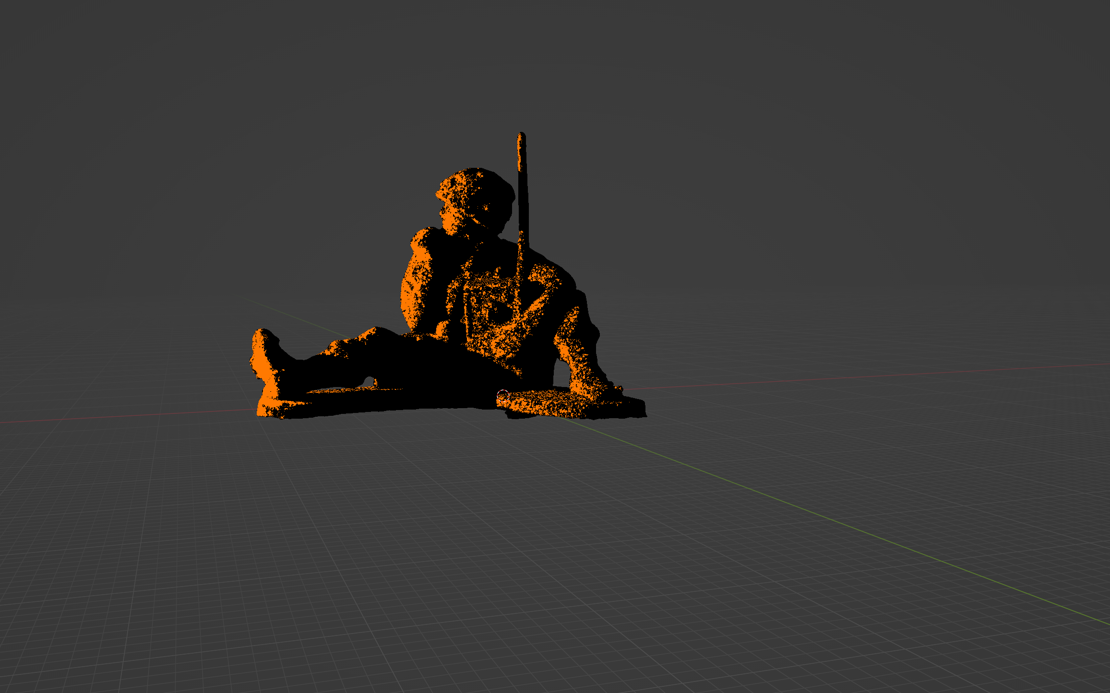
The soldiers on the board are 3D models built from my photos of real plastic army men, cleaned up and turned into game-ready meshes by a Blender pipeline. The map is drawn as a topographic chart, framed by a war-room instrument panel: alarm lamps, an analogue funds gauge, a Nixie-tube renown counter, a globe minimap, an objectives clipboard and a turn knob.
Under the hood
The rules run in a separate, engine-independent C# simulation that is fully deterministic. Every match can be replayed exactly, and computer opponents play automated test matches to check the balance. WarDesk is a playable prototype with computer opponents and hotseat play, and I’m still iterating on both the rules and the look.